
The steady growth of the registered investment advisor (RIA) channel has been a persistent development in the wealth management industry over the past decade. Through bull and bear markets, regulatory changes, and shifting economics, RIA-only advisor counts have continued to rise, cementing the channel’s expanding role within the intermediary landscape.
ISS Market Intelligence’s latest issue of the Windows into Wealth Management report reinforces that RIAs remain the largest net beneficiaries of advisor movement. Traditional broker‑dealer firms meanwhile have lost share to both dual registered and RIA-only approaches. While dual registration remains the most common approach, accounting for half of all reps at year-end 2025, the number of RIA-only reps was just shy of 105,000 and accounted for 16% of all representatives.
Evolving RIA Model
However, the growth itself is not the only story; the long‑term trajectory has thoroughly established the success and potential of the RIA model. The more revealing question for 2026 is how that success is shaping the channel’s future. At what point does that growth change the shape of a channel built on the appeal of independence?
Related: The Advisor Trends Powering ETF Growth and Portfolio Outsourcing
That question sits at the heart of Windows into Wealth Management: Q1 2026 report, which reveals the key trends behind how modern advisors approach independence. Breakaways remain an important source of RIA growth, but not every new advisor joining the channel is primarily interested in launching and operating a standalone firm. An increasing share of advisors are choosing to join existing RIAs as employees, as seen in the table below, seeking greater autonomy without the burden of building and maintaining everything themselves.
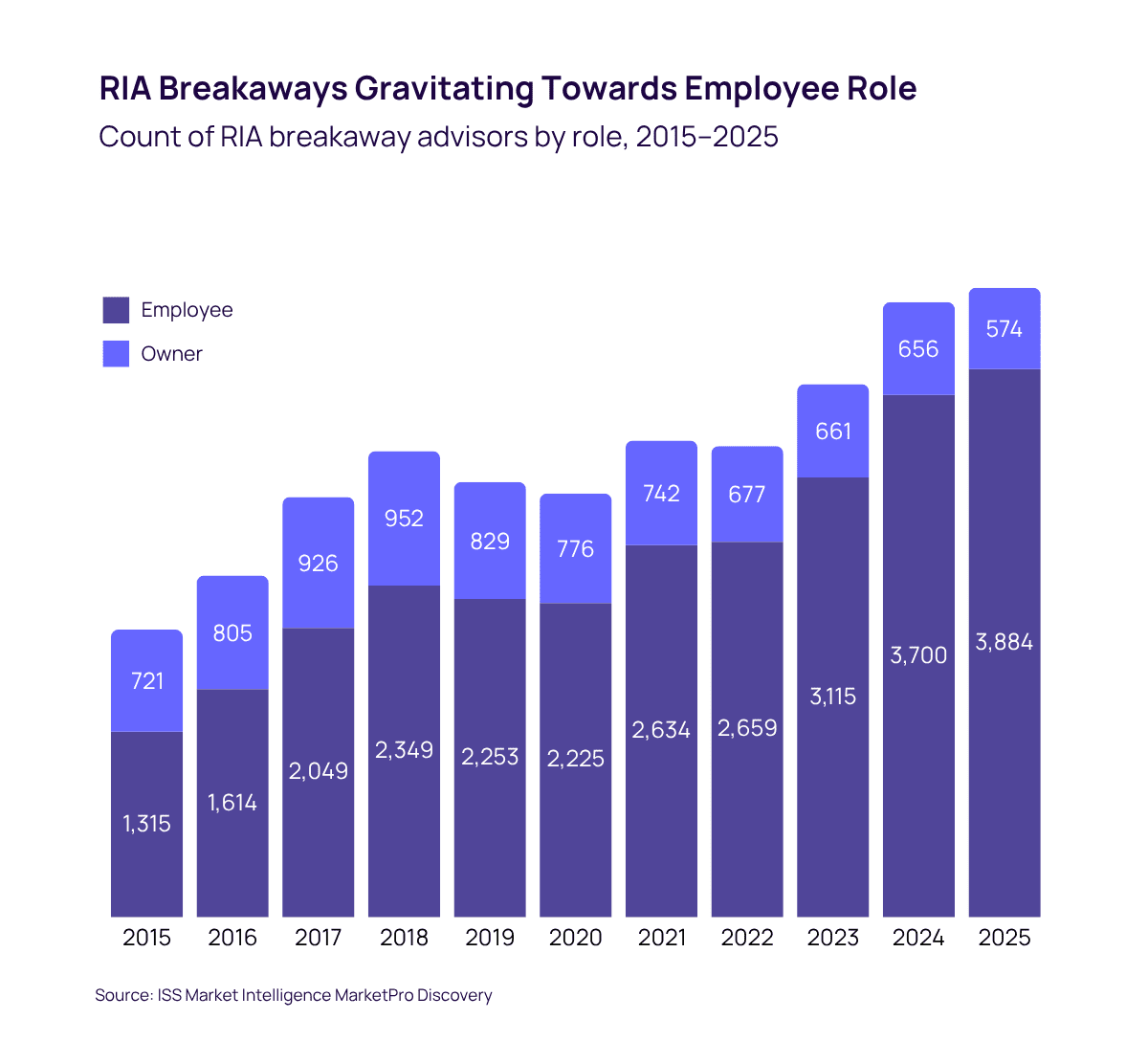
That shift reflects a broader trade-off now defining the channel: autonomy versus infrastructure. RIAs working to compete with the largest broker-dealers, or which recently came from a more centralized channel, may be attracted to larger firms that are better positioned to absorb complexity, offer more advanced technology, compliance support, and succession planning. The entrepreneurial appeal of ownership still matters, but the channel’s growth is supporting more than one way in.
Related: Growing Wave Toward Independence Gains Steam Amid Shifting Wealth Management Channels
Consolidation is reinforcing that trend. Interest from private equity firms and RIA aggregators has prompted record levels of RIA M&A activity, particularly among smaller firms, incentivized by the channel’s growth and the increasingly attractive opportunities for larger scale firms.
Together with ISS MI’s recently released Rep Movement Report, the latest edition of Windows into Wealth Management looks beyond headline growth to understand the shifting fortunes within the intermediary landscape and the maturing RIA channel. See the full report, now available to subscribers on the MarketSage research platform, to understand what this evolution means for advisors, firms, and the broader wealth management landscape. For more information about this report, or any of ISS MI’s research offerings, please contact us.
Authors:
Antara Maity, Senior Associate, U.S. Fund Research, ISS Market Intelligence
Alan Hess, Vice President, U.S. Fund Research, ISS Market Intelligence