

Carlos Cardone, Managing Director, ISS Market Intelligence, breaks down the latest Household Balance Sheet dynamics—including what’s driving asset growth, where flows are going, and why ETFs are reshaping the investment landscape. Key insights from the discussion are highlighted below.
▶️ Watch the full video conversation here:

A Surge in Assets Driven by Market Performance
Canadian household financial assets reached $7.7 trillion by mid‑2025 and are on track to surpass $8 trillion for the first time. While this milestone underscores the resilience of household balance sheets, the drivers of growth have shifted. Recent gains have been propelled primarily by market appreciation, not net new savings. Within investment products, ETFs captured the vast majority of flows.
Growth in Canadian Household Financial Assets
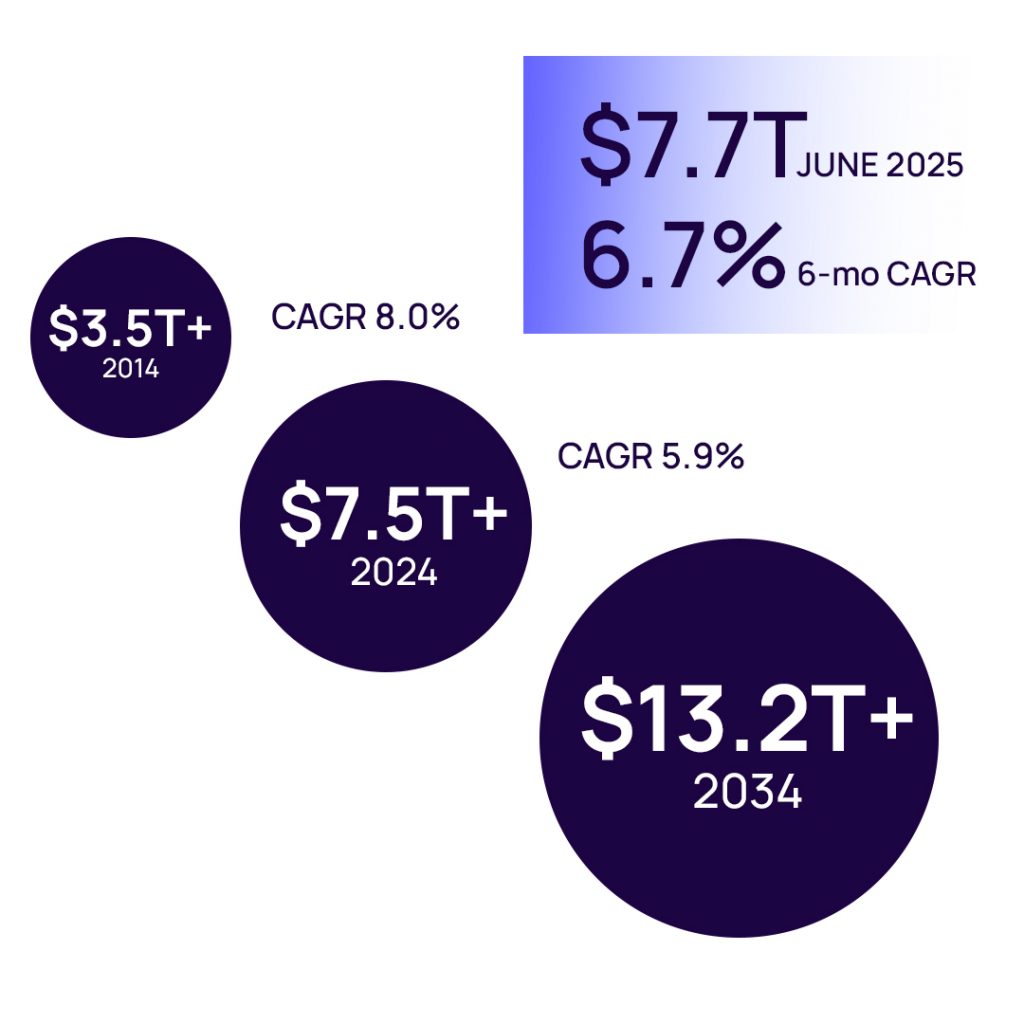
This long‑term Household Balance Sheet view highlights both scale and transition. While wealth accumulation remains robust, the pace of expansion has moderated—setting the stage for a more competitive, reallocation‑driven environment.
Market Appreciation, Not Savings, Drove Recent Gains
Despite headline asset growth, net new household savings remain under pressure. After the extraordinary accumulation of the pandemic years, households are contending with higher inflation, rising interest rates, and increased debt‑servicing costs—all of which constrain new asset formation.
As a result, roughly two‑thirds to three‑quarters of asset growth over the past two years has been driven by market valuation effects, particularly in equities.
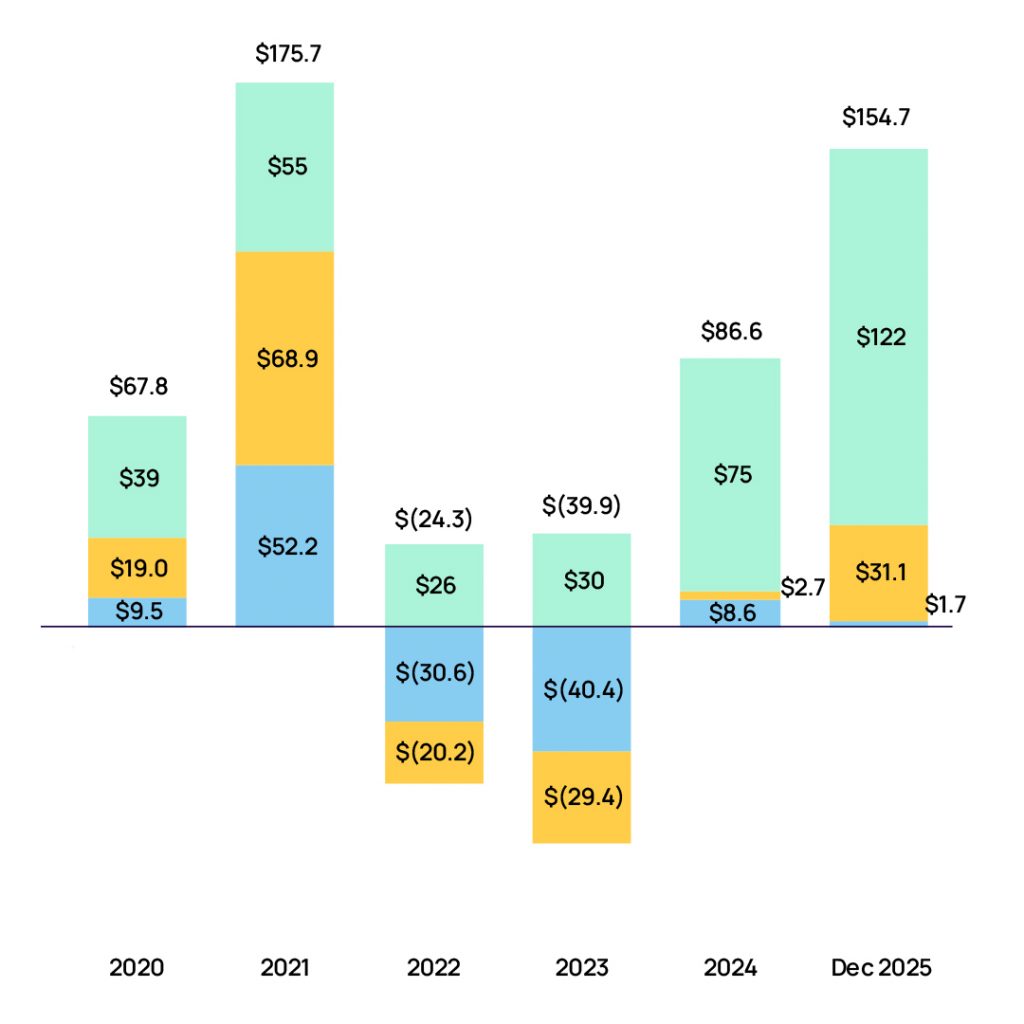
Net Flows by Major Asset Category, 2020–2025
Investment Funds Rebound—ETFs Dominate the Cycle
Investment funds were the clear standout in 2024 and 2025, attracting more than $150 billion in net flows in 2025 alone—the second‑highest year on record.
According to Carlos, ETFs are not only absorbing new money—they are increasingly substituting mutual funds and direct securities, particularly in self‑directed portfolios.
Why this matters: ETFs have become the primary vehicle for discretionary investment dollars, fundamentally altering product competition and distribution dynamics.
From Passive Core to Broader Toolkit: The ETF Stack Expands
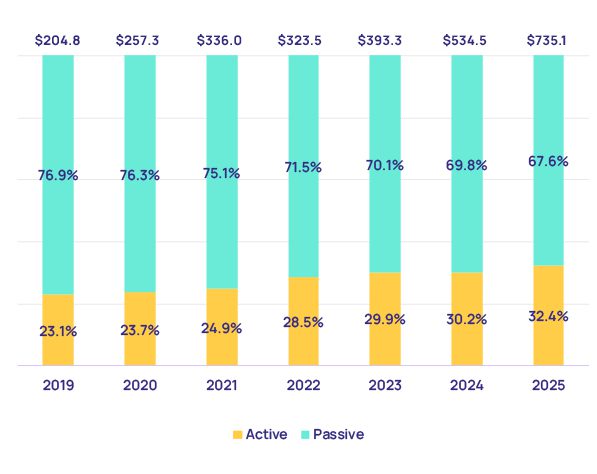
Passive index ETFs continue to attract the majority of inflows, but the ETF ecosystem has evolved into a full‑spectrum investment toolkit.
Active vs. Passive ETF Assets in Canada
Distribution Tells the Story: Self‑Directed Channels Lead
ETF growth is overwhelmingly concentrated in self‑directed and full‑service brokerage channels, which now account for more than 85% of ETF assets in Canada.
In 2025, online brokerage assets surpassed $1.1 trillion, growing over 20%. ETF assets within those platforms grew more than 45%, far outpacing overall asset growth.
What This Means for Firms Planning Ahead
1. Plan for Reallocation, Not Just Accumulation
Market‑driven growth favors firms that capture asset movement across products and channels.
2. Treat ETFs as Core Infrastructure
ETFs are no longer optional—they are foundational to modern portfolio construction and distribution strategy.
3. Segment for Decumulation
Understanding payout exposure at the household level is critical as retirement dynamics increasingly shape flows.
Key Highlights
- Canadian household financial assets reached $7.7 trillion by mid‑2025 and are approaching $8 trillion.
- Most recent growth has been driven by market appreciation, not net new savings.
- Nearly $120 billion flowed into ETFs in 2025, cementing their dominance.
- ETF assets in online brokerages grew more than 45% in a single year.
About MarketSage and the Household Balance Sheet
ISS Market Intelligence’s Household Balance Sheet provides the definitive view of Canadian household wealth—tracking not just asset size, but movement, behavior, and strategic implications. Through MarketSage, these insights help firms understand where assets are going next and how to position for sustainable growth.